Thursday, July 26, 2018

Drainage Project 7/26/18

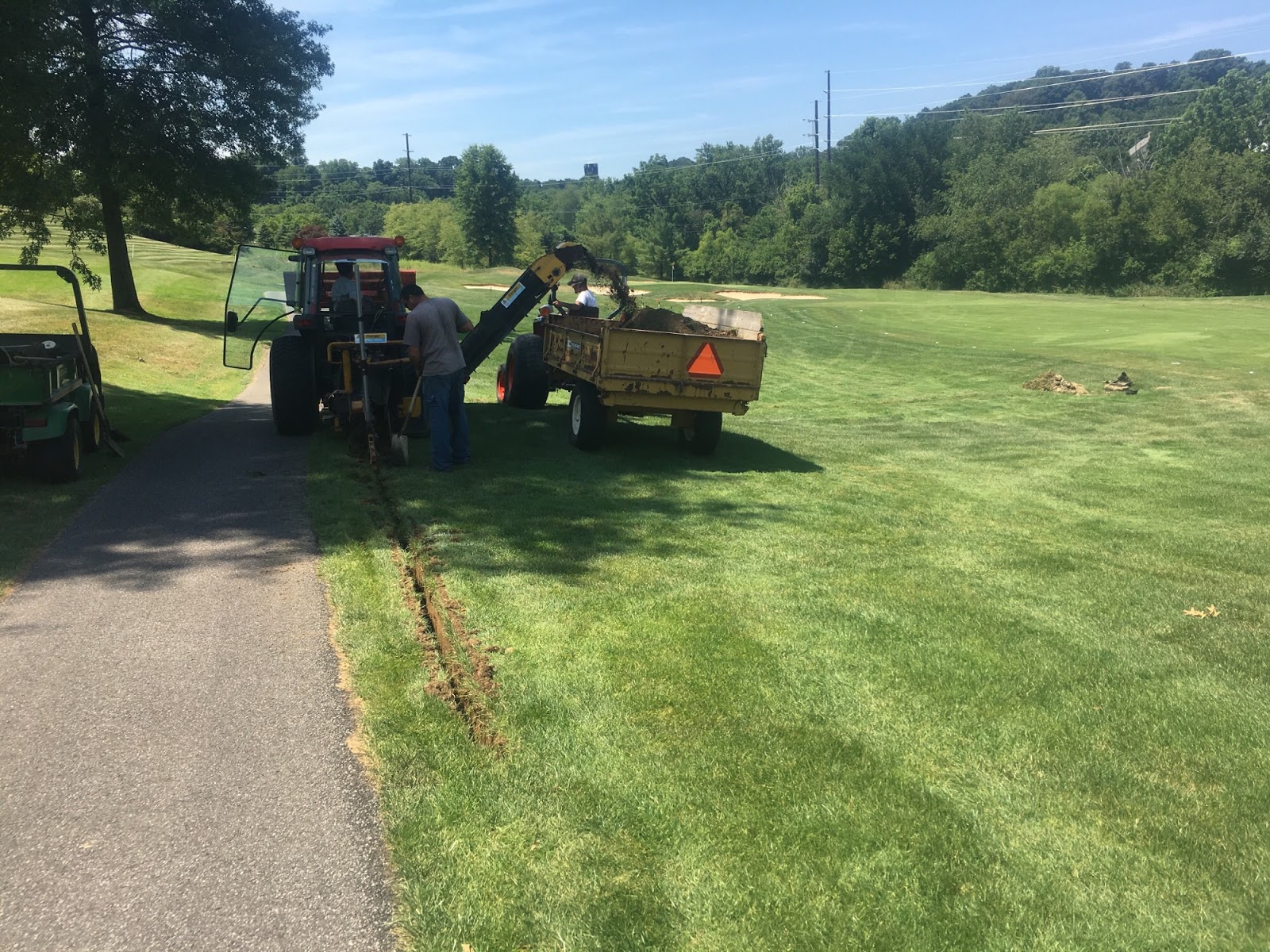
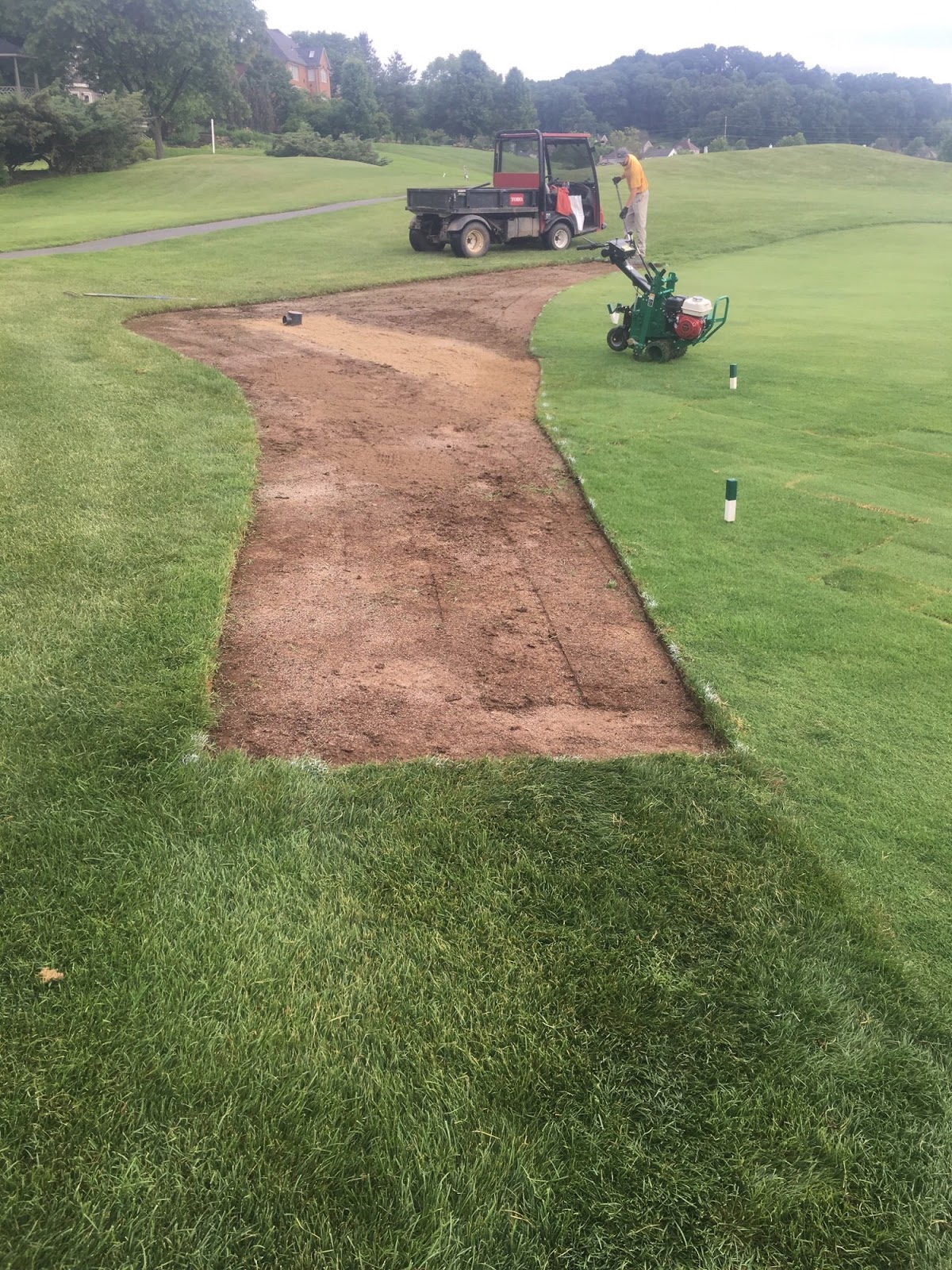
Work continues on the drainage project and the contractor recently finished working on Orchard 4, 5, and upper 8.  After finishing Orchard 4 fairway, we had the contractor install a drain line in the left rough near the cart path that is always wet.  A significant amount of water comes from the 5 tee area and funnels down across the path into the rough.  The new drain line runs parallel to the path and will catch all of the water so it can't reach the rough.  Once that area dries out enough we will strip the worn turf, add soil and raise the grade to the level of the path, and install new fescue sod.  On Orchard 5, earlier this year the maintenance staff installed two new drain lines, but there was a small area at the very beginning of the fairway we couldn't get to.  Well, the contractor took care of that for us and you may have noticed the end of the pipe runs through the rough almost to the cart path.  This new line will also catch a significant amount of water that comes through the swale before the fairway.  On upper Orchard 8, the left (lower) fairway always seemed to stay wet and required close to 400 feet of drain line.  Our goal is to catch the water in the rough and keep it from running down the fairway.  I wasn't surprised to see all the rock, hard clay, and tree roots that came up while trenching.  Those items are not conducive to good draining soil.

In addition to the contractor performing drainage work, the maintenance staff spent a couple days finishing up the "big dig" next to the silver tee on Lakes 1.  All the old, non-functioning drainage was removed and replaced with a new catch basin and pipe.  Then the cavity was backfilled with gravel and a sand/soil mix was spread on top to allow for better surface drainage.  Turf-type tall fescue sod was again used due to it's quick rooting and other desired attributes, and should be ready for foot traffic in a couple weeks.  So far the area is dry and the drainage is working as it should given our recent rain events.

Trenching along the cart path on Orchard 4
Backfilling the trench on Orchard 5
Trenching on Orchard 8 upper fairway.  The thin turf at the edge of the fairway is a clear indication of turf that remains saturated for extended periods
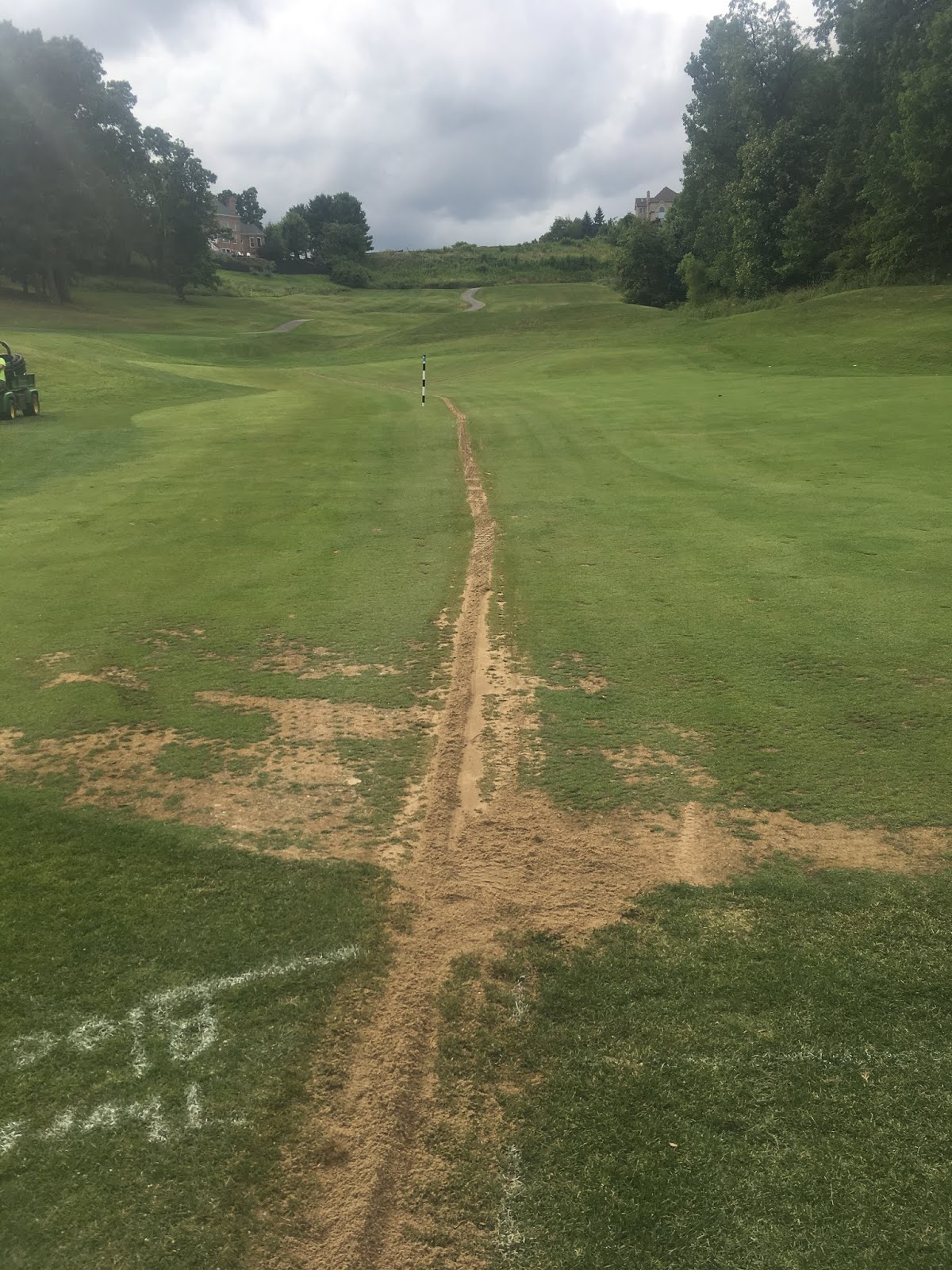
Backfilled trench on Orchard 8
Installed a lateral line on Orchard 8 to catch water coming from the fairway bunker and left side of the hole
The "swamp" on Lakes 1 prior to excavation
Numerous drain lines were installed over the years but nothing was working
Almost finished removing the mucky soil
The finished product that should be ready for foot and mower traffic in 10-14 days

Thursday, July 19, 2018

Course Update 7/19/18

Greens:  The dry weather has allowed us to keep the putting surfaces in excellent condition and the turf is very healthy.  You've probably seen us spot watering to cool the turf and replenish soil moisture.  Expect the greens to get a little quicker as we "tune them up" for the Women's and Men's Invitationals.

Tees:  Most of the tees are holding up well given the amount of play and recent weather.  A few have more thatch than we'd like, but we have a plan to address that this fall.  In the meantime, we're spot watering every day and rotating the markers to other tees to vary the wear patterns.

Fairways:  I've been most impressed with the condition of the fairways this year.  Spring aerification provided much-needed decompaction and improved surface drainage, while some minor tweaks to our agronomic program greatly improved turf health.  In recent years with similar weather, the fairways would have significant dry areas and be visually un-appealing.  This year it's the complete opposite!
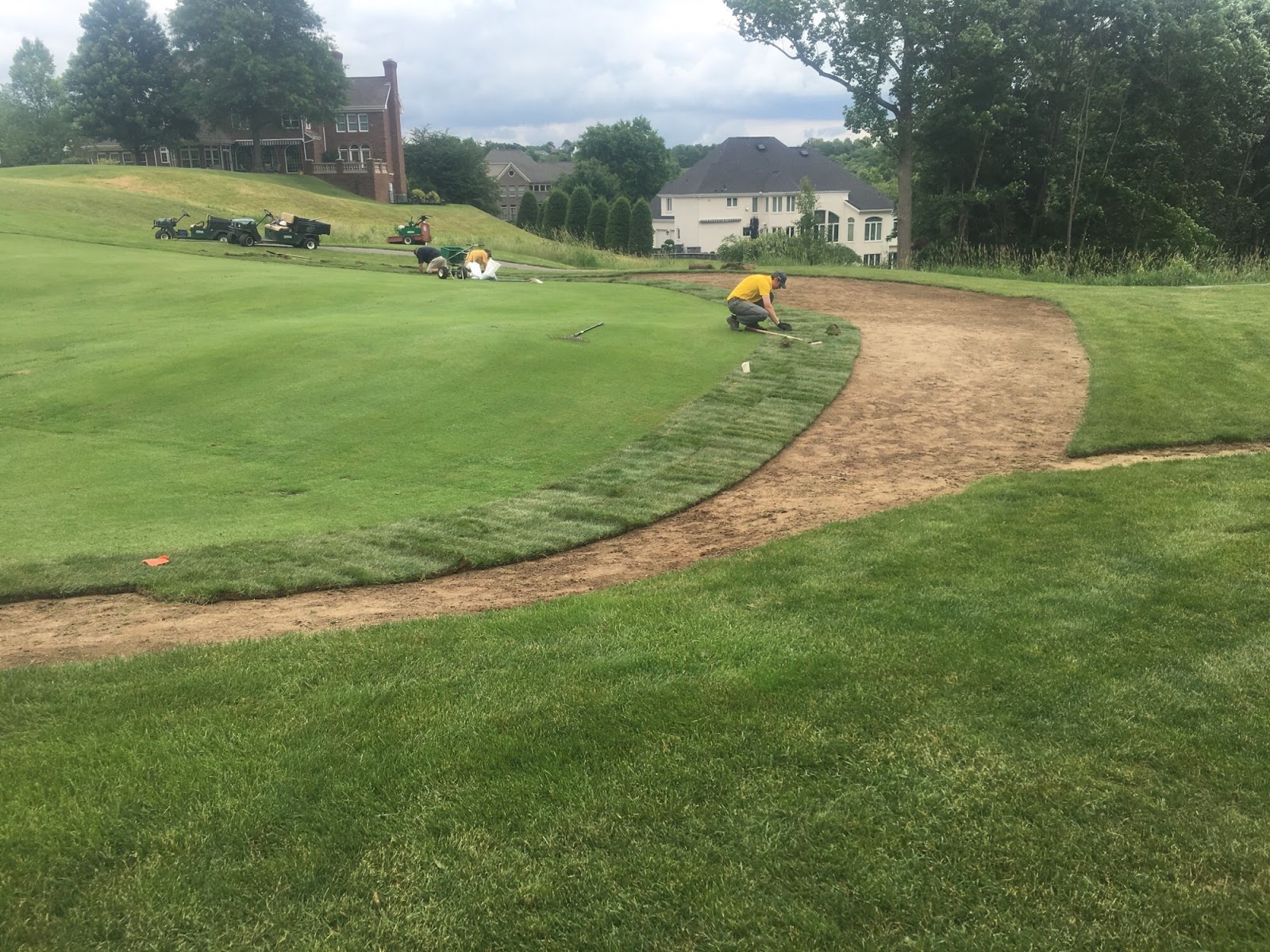
Drainage Project:  New drain lines have been installed on Orchard 1 fairway and rough, and Orchard 4 fairway.  The contractor is getting ready to install drainage in Orchard 4 rough, left of the fairway near 5 tees that always stays wet.  In addition to the drainage project, the maintenance staff has been raising and sodding the low areas void of turf so surface water will be diverted to the new drain lines.

Trenching on Orchard 4 fairway
A laser-level is needed when trenching to ensure that water will flow where we want it to
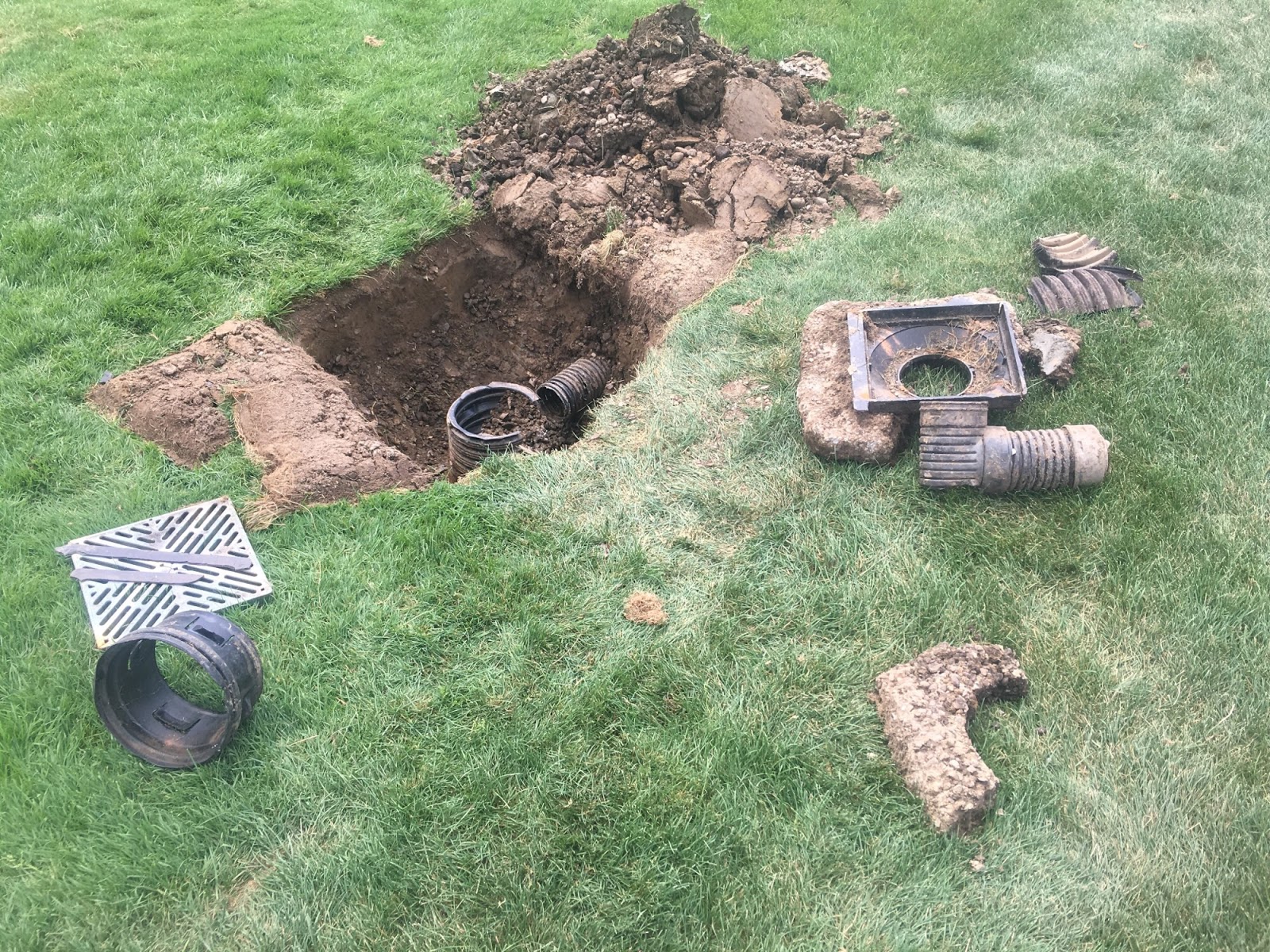
One of the collection basins on Orchard 4 that wasn't working.  Sometimes it's easier to remove the old material and start over
Raising a low area (bird bath) on Orchard 1 fairway
The finished product.  Please do not hit from any area marked with green/white stakes.  These areas have been recently sodded 


Thursday, July 12, 2018

Drainage Project

The drainage project started this week on Orchard 1.  The project addresses the areas in the fairways and rough that hold water and as a result, experienced turf loss last summer.  The process begins by cutting a trench 15" deep by 4" wide to remove the hard clay and any old drainage pipe that is not working.  Once the trench is cleaned out, 3" perforated pipe is installed and small, pea-size gravel is backfilled around the pipe.  We use 3" pipe because it keeps the trench width narrow, but still carries a large amount of water.  The gravel will fill the trench to within 2" from the surface, then a blend of sand/soil will be occupy the remaining space.  The sand/soil mix holds just the right amount of water for healthy turf growth, compared to straight sand that dries out too quickly.

We plan to install drainage on the following holes:
Lakes 1, 7, 8, 9
Orchard 1, 4, 5, 8 (both upper & lower)
Grove 1, 3, 6, 7, 8, 9

The trencher removes the material and conveys it into a trailer
Filling the trench with pea-size gravel
Backfilled trench prior to adding sand/soil blend
The gravel gets dumped into this custom made hopper that rides over the trench and backfills as it moves forward
Using the material handler and conveyor to place sand/soil blend on top of the gravel
Installed a 12" basin at the beginning of Orchard 1 fairway on the left side where water usually collects and kills the turf
Needed an excavator to dig through the tree roots and install an outflow pipe from the basin to the creek that runs between Orchard 1 & 5


Thursday, July 5, 2018

Bees in the Bunkers

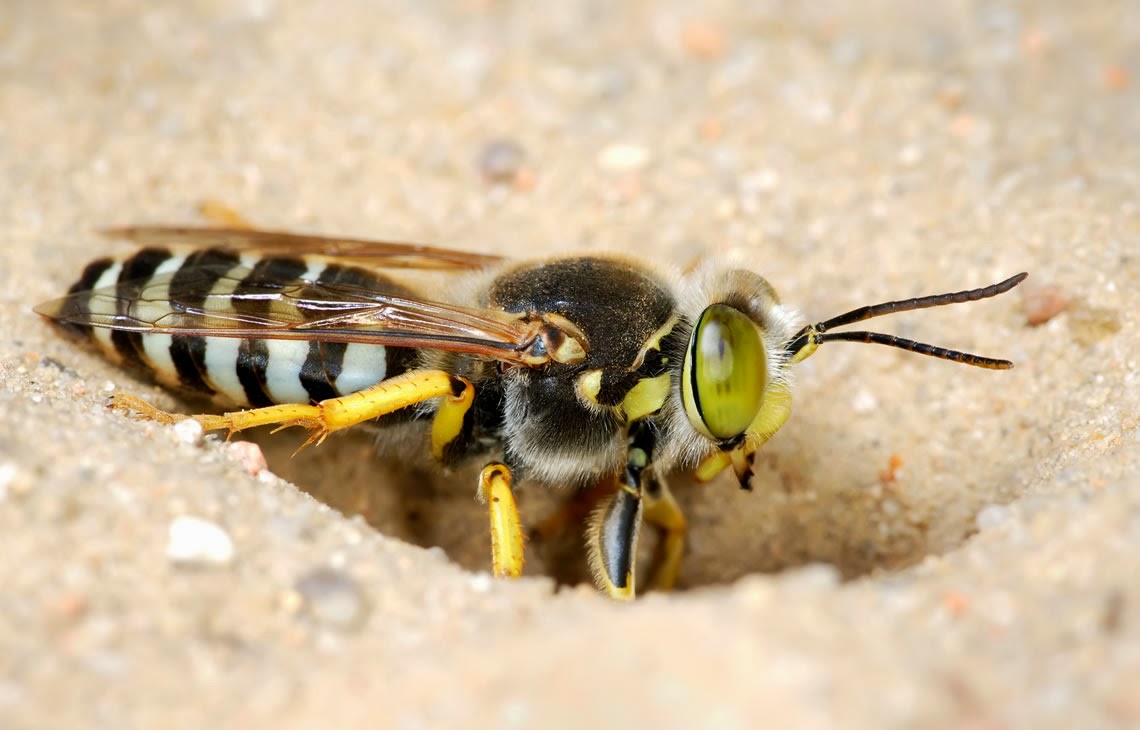
Some concerns have been mentioned about the "bees" that invade our bunkers every year. They are actually Sand Wasps (Bembix species) and surprisingly pose no threat to humans.  Keep in mind that our staff maintains the bunkers daily and we are constantly disturbing them. NOT ONE STING!

Sand Wasp (Bembix species) burrowing in the sand

For a few weeks every summer we have little friends make homes in our sand traps. These fast fliers are officially known as the Bembix Sand Wasp. They dig numerous burrows in cool, moist sand (ie- bunkers) to lay their eggs. Juvenile wasps, known as larvae, emerge from the eggs where they remain in the sand and grow into adults. Adult females congregate together in large numbers when making nests to bait their prey. The higher populations of larvae in nesting sites attract flies, beetles, caterpillars and grasshoppers. These insects are captured by the female wasp and taken back to the burrows to be fed to the growing larvae.

The existence of these insects in the bunkers is a nuisance to golfers, but beneficial to the course as they help to control the population of flies and detrimental turf beetles by preying on them.
The greatest concern for golfers is that they will get stung by these wasps when entering a bunker to play a shot.  Studies have proven that this particular wasp is not aggressive and of no harm to humans.  Both male and female wasps will not sting humans unless they are stepped on or smashed between your hands.  When approached by a human the sand wasp will initially swarm, looking for food, and then go back to their burrows to protect their larvae.

Thursday, June 28, 2018

Course Update 6/28/18

Greens:  Mowed every day (weather dependent), and double-cut on the weekends and for member tournaments.  Greens are sprayed every week with low rates of fungicide, plant growth regulators (pgr's), and fertilizer to maintain healthy turf and keep new growth to a minimum.  We can usually mow 3-4 greens before needing to dump the buckets that collect the clippings.  We recently applied a wetting agent (surfactant) that helps water move into and thru the rootzone.  Wetting agents break the hydrogen bonds in the water molecule and the reduced surface tension allows the water to soak into the rootzone faster.  We wanted to be prepared for spot watering with the return of hot, dry weather.  Golfers won't notice a difference in the turf, in fact the greens tend to roll faster after applications of wetting agents because less moisture is held near the surface.

Tees:  New this year we have one staff member dedicated to tee service.  Their job entails wiping down the divot boxes and keeping them filled with divot mix, keeping the hole monuments clean from bird droppings, refilling/maintaining the 6 divot bottle stations throughout the property, cleaning the 3 course restrooms, collecting trash and other debris, and filling divots.  The tees still have the same amount of divots, but I've noticed the divots are filled more often and filled correctly (see the post about divots from two weeks ago).

Fairways:  They have great color and dense, healthy turf heading into summer and held up well given the amount of rain we've received this year.  More hot weather is coming for at least the next week, so you may encounter the staff spot watering or running irrigation heads during the day.  That is how we cool the turf and keep it from wilting.  We continue to sod the smaller depressions void of turf and the larger areas will be addressed with the drainage project that is starting soon.

Bunkers:  1.33" of heavy rain fell yesterday afternoon and last night that made a mess in the bunkers.  Most of the staff spent the entire day pumping water and repairing washouts.  More time will be spent in them tomorrow to finish everything for the weekend.

Before
Before

After

Thursday, June 21, 2018

Irrigation Systems

With the onset of hot, dry weather, we've had to start relying on the irrigation systems.  We have two similar systems, with the main one covering Orchard and Grove.  The Lakes nine has its own separate system including one pumphouse which is located behind #7 green.  The system on Orchard and Grove has a primary pumphouse, located across the lake from the practice green, along with a booster pumphouse left of the gold tee on Grove 8.  The main pumphouse is able to provide 1,100 gallons per minute at 125 psi while the Lakes pumphouse can do 500 gallons per minute.  Running a full cycle of every irrigation head requires 6 hours of run time, which equates to 576,000 gallons of water.  We may run a full cycle with every head a few times per month, but we're typically applying 200,000-275,000 gallons of water per irrigation cycle.  All the water used comes from the lakes/ponds on property, we do not have to purchase water like a lot of clubs do around Pittsburgh.  We also have to record how much water we pump every month and submit a usage report to the Pennsylvania Department of Environmental Protection.

There are approximately 1,300 irrigation heads throughout the property.  Each head measures 12" high and 8" in diameter, and retails for $425 new.  The heads attach to piping that is 18"-24" below ground, and are wired back to irrigation controllers (we call them satellites).  There are 34 satellites throughout the property and retail for $4,000-$6,000 each depending on how many irrigation heads they can control.  The satellites are hardwired and communicate with a central control computer located in the maintenance building.  We also have the ability to connect 1" diameter hoses to the systems when spot-watering is needed.  The hoses thread onto a "key" which is inserted into a snap valve, or quick coupler.  The quick coupler has a spring loaded valve that is opened as the key is turned.  There are 2 quick couplers at every green, and each tee complex also has 2 couplers.  Then there are a handful of couplers in every fairway and near bunkers.  Typically during the summer, one person is able to manage the systems and perform necessary maintenance.  This week has seen an increase in repairs so 2 staff members have been working hard to keep up with everything.

New irrigation head waiting to be installed

After installing the new irrigation head we discovered a leak from the service T that the quick coupler was connected to.  That's a 2" diameter pipe 18" deep that supplies water to the heads and quick couplers.  Your home only has 1/2" up to 3/4" size piping throughout.

Backfilling around the new head and quick coupler

One of the 34 irrigation controllers throughout the property

Our table of old irrigation heads and related parts.  We save and reuse what we can since some of the items aren't manufactured anymore

Thursday, June 14, 2018

Divots

Now that the season is well underway, I thought it would be a good time to talk about divots.  When you hit a shot from a tee or fairway and the divot stays intact similar to the first picture below, you want to replace that divot.  If replaced within 24 hours of being removed, it has a very good chance of surviving.  Obviously you want the soil side down, and once in place, you want to step on the divot to smooth it out and make sure the existing roots contact the soil.  Sometimes a little divot sand can be applied if the divot doesn't fill the entire void.  If the divot explodes when striking the ball, there's no reason to try to gather all the little pieces.  They won't survive so the best course of action is to fill the void with divot sand.

Speaking of divot sand, we purchase a special blend of sand that is dyed green and contains a nutrient package designed to help the new turf quickly grow.  The divot sand comes in 2,000 pound (1 ton) super-sacs and we have a "Divot Mixing Area" in the maintenance building where we add bentgrass seed to the sand/nutrient blend using a standard cement mixer purchased from one of the home improvement stores.  During the summer, we go through one super-sac of divot mix per week between the divot bottles on the carts, the six refill stations throughout the course, in the divot boxes on the tees, and what the staff uses when filling divots each day.  By the end of the year, we will have used 25-30 super-sacs, at a cost of $410 each.  Bentgrass seed costs $11 per pound and we use around 200 pounds per year.

**Please use the divot sand only on tees and fairways.  Using the mix in the rough and along cart path edges leads to contamination and undesirable playing conditions.  Rough-height bentgrass is also more susceptible to disease and dies out easily during the summer leaving large areas of dead or thin turf.**


This is a fairway divot and should be replaced since it stayed intact

Void where the divot came from

Divot was replaced and stepped down to smooth out.  No divot sand was needed

Fairway divots weren't reusable so the voids were filled with sand

Tee divots improperly filled with sand.  Notice how the sand is piled up between the divots.  This wastes sand and dulls the mowers

"Divot Mixing Area" at the maintenance building

Thursday, June 7, 2018

Course Update 6/7/18

Sod Work
This week we addressed some areas in the rough by installing turf-type tall fescue sod from a nursery near State College.  Turf-type tall fescue has been gaining popularity over the past decade due to it's desirable characteristics and more nurseries are growing it.  As the name implies, it has finer texture leaf blades similar to ryegrass and bluegrass.  Kentucky bluegrass has long been the "standard" when it comes to rough sod, but turf-type tall fescue has a darker green color, is less prone to disease and insects, can hold up better when subjected to increased foot and cart traffic, and does not require as much water during the summer as Kentucky bluegrass.  We brought in seven pallets (4,200 sq.ft.) on Monday to finish up some areas on Orchard 5 & 6, along with between the gold and blue tees on Grove 3.  We still have some leftover and started sodding stump holes around Grove 2 green.


Rough area on Orchard 5 prepped for sod

Orchard 5 after

Rough area before Orchard 6 fairway prepped and starting to install sod

Orchard 6 after

Thursday, May 31, 2018

Course Update 5/31/18

Greens:  The turf has been a little off-color, but that's in response to the stretch of hot weather we recently experienced and is not an indication of poor health.  We wanted the root zone to dry out and force deeper rooting, which will help the turf survive the stressful summer season.  We had some dry spots show up in the collars which we addressed by hand watering, but overall the turf held up great during the first heat wave of the season.  We also lowered the mowing height again this week and the greens are rolling great.

Tees:  The tees are also a little off-color and are due for an application of fertilizer.  We'll use an organic 5-4-5 fertilizer next week which will green them up and help with divot recovery.  Organic fertilizers are safe to use in warm weather and release their nutrients over 8-10 weeks.

Fairways:  The turf is healthy and has great color.  Many of the bad fairways from last year have improved dramatically and will continue to get better.  Even though it was hot and dry earlier this week, we were finally able to sod the two drain lines on Orchard 5 and the areas in Lakes 5 approach.  The sod will need to be rolled and topdressed several times before it's ready for play, so please keep off of it as much as possible.  The beginning of Orchard 6 fairway is scheduled to be sodded early next week, depending on the weather.

Bunkers:  Edges were trimmed this week and that process will occur every few weeks depending on how quickly the turf grows.  The grass surrounds were sprayed with a herbicide several weeks ago to control weeds, but will need to be sprayed again as new weeds have emerged.

Recently sodded drain line near the green on Orchard 5 fairway

Recently sodded drain line in the middle of Orchard 5 fairway

Low areas void of turf prepped for sod on Lakes 5 approach

Recently sodded areas on Lakes 5 approach

Thursday, May 24, 2018

Course Update 5/24/18

Greens:  Poa seedheads are almost gone and we've been slowly lowering the mowing heights for the past week.  Expect faster green speeds over the next few days as things dry out.  Weekly growth regulator and fertility sprays are being applied in small amounts to keep the turf in peak condition going into summer.  Expect to see light applications of topdressing sand every few weeks to help dry out and smooth the putting surfaces.

Tees:  The new tees on Grove 2 & 3 are ready for play and will open tomorrow.  The temporary tees that were being used will be aerified, seeded and topdressed to promote faster recovery.  I anticipate several weeks for them to fully recover.

Fairways:  The turf has greatly improved since last year, but we still have numerous areas that require attention.  We had planned to start sodding areas this week, but the wet weather changed those plans.  We'll try again next week.

Rough:  If you sat there long enough, you could probably see the rough grow.  Even with every available body assigned to maintaining the rough in the afternoons, we still can't keep up with it.  It appears the seedheads are starting to thin out, and that's a great indication that the rough will be transitioning into it's summer growth stage and hopefully start slowing down.  In addition to mowing, we've started string trimming all the various items throughout the property.  This time of year we send out a trimming crew every week or two.  As the summer goes on and we experience drier conditions, not as much trimming is required.  Still have some dandelion, clover and thistle emerging, and we plan to resume herbicide applications next week.

Stump Grinding:  The contractor needed to take care of some other small jobs and will be back on site once those are complete.


Have a wonderful holiday weekend!